MACOS MENU BAR TOOL
No terminal needed all your ports, right in your Bar.
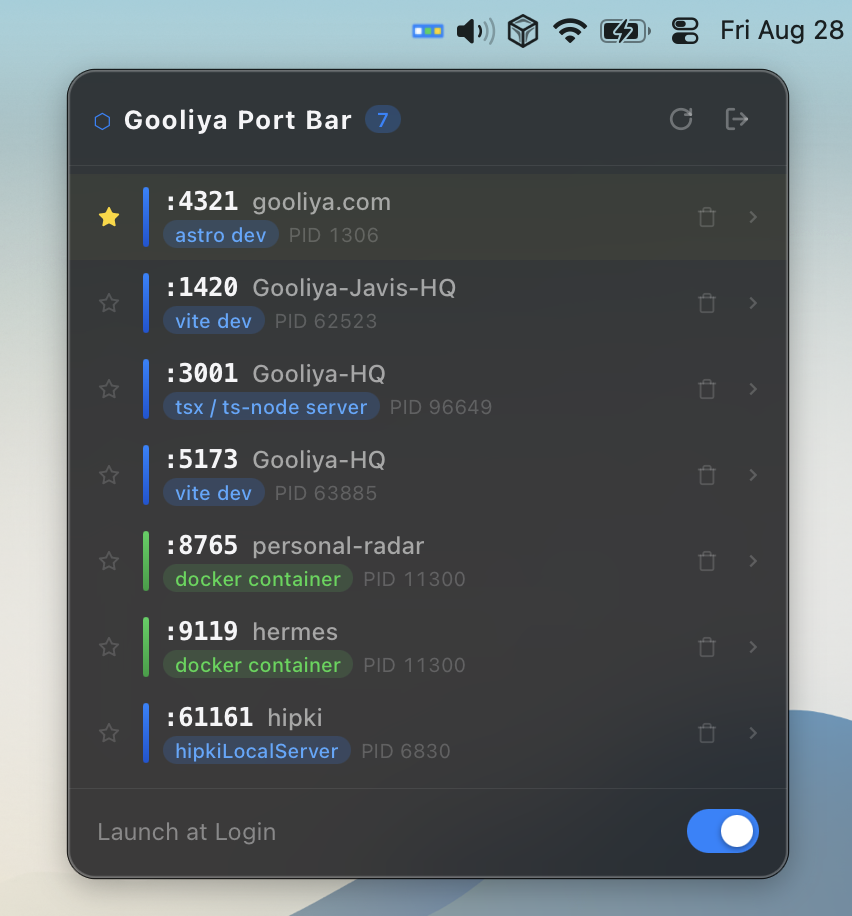
Gooliya Port Bar lives in your menu bar, automatically scanning common dev servers and Docker containers. Pin, rename, remove, and open them in your browser with one click.
Works on Apple Silicon and Intel Macs · Lives in the menu bar · No Dock icon
Why Gooliya Port Bar?
The more projects you're running, the more of these you hit every day
Too many ports, too hard to track
With enough terminal windows open, it's easy to lose track of which port belongs to which project.
See everything from the menu bar
A menu bar app lists every port your Mac is currently listening on — no more switching windows to check.
Finding the URL means opening a terminal
Want to test something in the browser? You still have to dig through the command line to find the port number.
One click to open
Click any item in the list to open that port in your default browser, instantly.
Forgotten services pile up
As side projects multiply, old services get left running — sometimes even colliding on the same port without you noticing.
Pin, rename, and remove — all in one click
Pin the ones you use most to the top, give each service a name you'll actually recognize, and remove the ones you don't need with one click.
Everything you need
7 features, and counting
-
Scan local ports
Automatically lists listening npm, Vite, Next, and Astro dev servers, plus Docker containers.
-
Pin your favorites
Pin frequently used ports to the top of the list so you don't have to scroll to find them.
-
Rename anything
Give any entry a name you'll actually recognize, instead of a raw port number or process name.
-
Open in your browser, one click
Click an entry to open that port in your default browser — no need to type a URL.
-
Automatic rescanning
Rescans automatically when the window regains focus, or refresh manually anytime.
-
Launch at login
Optionally start automatically when you log in, so you never have to open it by hand.
-
Lives in the menu bar, not the Dock
Stays entirely in the macOS menu bar — no extra icon cluttering your Dock.
Quick start
Three steps and you're set
-
1
Download Gooliya Port Bar
Download the latest
.dmgfrom Releases, then drag Gooliya Port Bar into your Applications folder. The same file works on both Apple Silicon and Intel Macs. -
2
How to install
Drag Gooliya Port Bar.app into the Applications folder, then double-click to open it. The first time, macOS will ask you to confirm — go to System Settings → Privacy & Security and click Open Anyway, then confirm with your password or Touch ID. You won't be asked again after that.
See the install screenshots
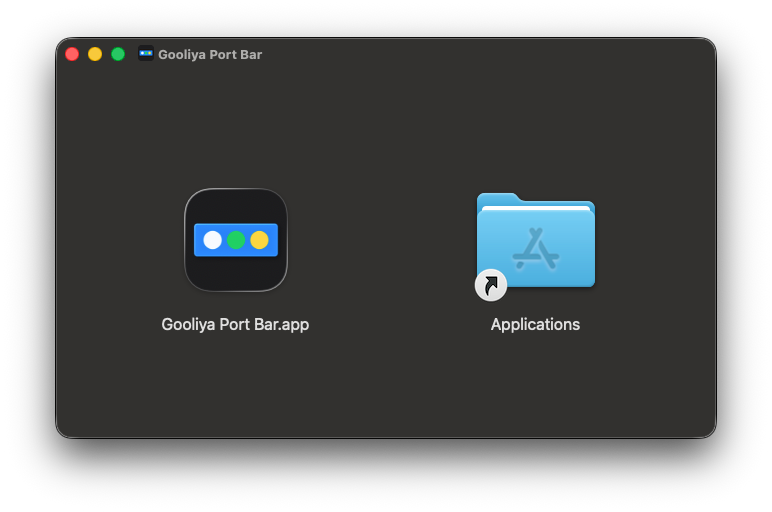
Drag into Applications 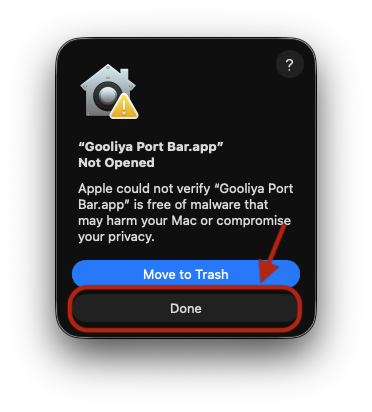
First-launch prompt 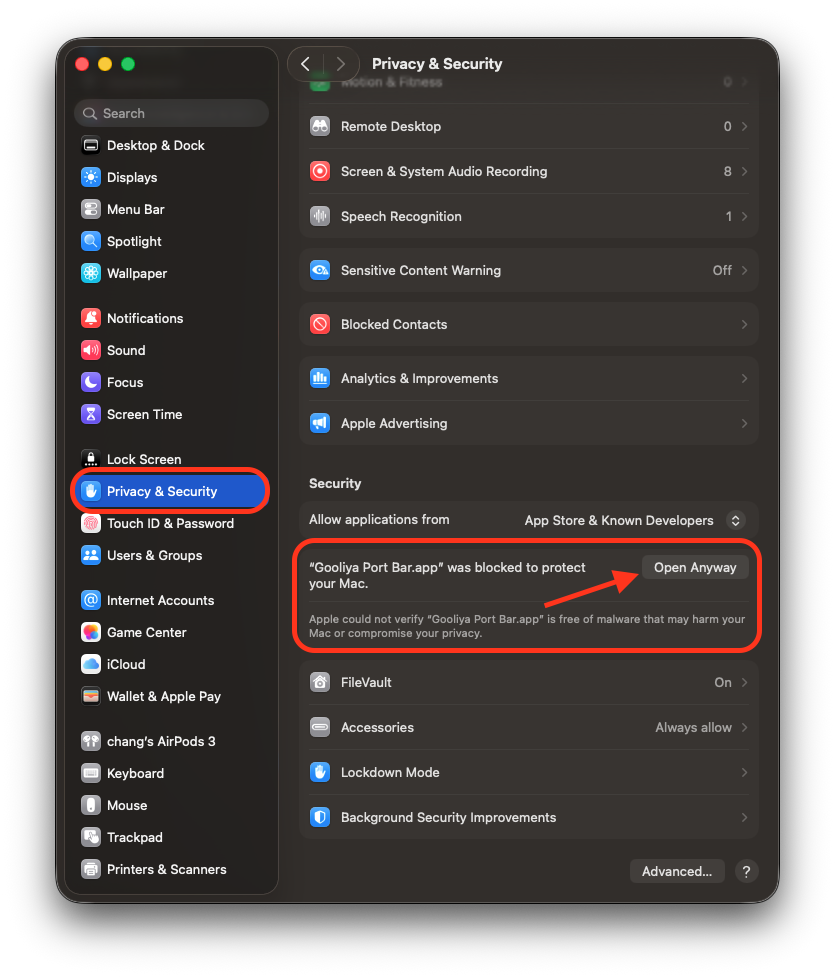
System Settings → Open Anyway 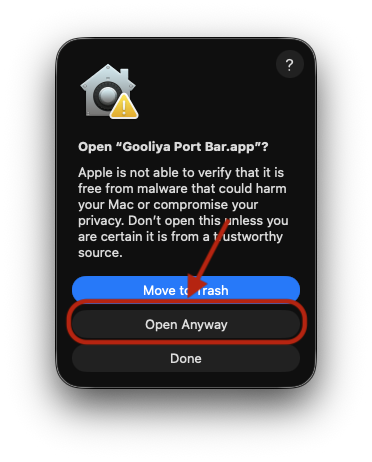
Confirm opening 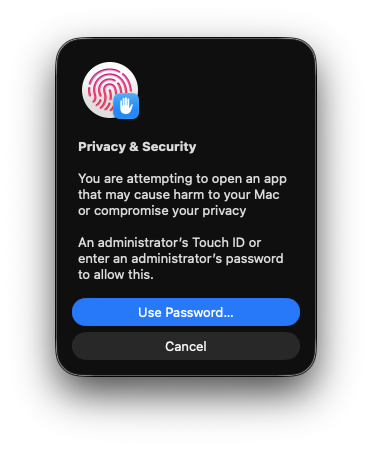
Password or Touch ID -
3
Start using it
Once open, the app lives in your menu bar. Local dev servers and Docker containers are scanned automatically — just click one to open it in your browser.
FAQ
Two steps to feel confident this app is safe
The app is packaged with an ad-hoc signature (a codesign integrity signature), and the source is fully open under the MIT license. Here's how to check it yourself:
- Verify the hash: every Release includes a
checksums.txt— after downloading, runshasum -a 256 *.dmgin the same folder and compare the value to confirm the file wasn't tampered with. -
Have AI review the source: open it directly in ChatGPT, or copy the text below and paste it into Claude or another AI assistant for a quick scan.
Please review the source code of this open-source macOS app at https://github.com/imsyuan/gooliya-port-bar (Rust + Svelte, built with Tauri). Look especially for any outbound network calls, access to sensitive files, or suspicious data exfiltration behavior.
Does it support Intel Macs?
Yes. The build is a Universal Binary — the same .dmg works on both Apple Silicon and Intel Macs, so there's no version to choose.
The menu bar icon is missing, or clicking it does nothing?
Gooliya Port Bar runs as a single instance and never appears in the Dock. Launching it again simply brings the existing window to the front instead of opening a new one. If you can't find the icon in the menu bar at all, check Activity Monitor to confirm the app is still running.
I don't see a dev server I started — what should I do?
Scanning relies on lsof to find ports in the LISTEN state, then classifies each one as a Node dev server (vite, astro, next, tsx/ts-node, etc.) or a Docker container. The list rescans automatically when the window regains focus, or you can refresh manually — if a service started after the last scan, one refresh usually picks it up.
Does this site or the app send data anywhere?
The app itself never connects to the network — all scanning happens locally. This website uses Google Analytics for basic traffic stats and doesn't collect any other personal data.
How do I report an issue?
The source is public on GitHub under the MIT license — feel free to open an issue there with questions or ideas.